
- Posted on
- AdCraft ads
- No Comments
Panic Attack Symptoms
Panic attack symptoms can appear suddenly, often without warning, leaving individuals feeling overwhelmed, frightened, and out of control. These episodes are not just moments of stress—they are intense physiological and psychological reactions that can significantly impact daily life. Understanding panic attack symptoms is essential for early intervention, accurate identification, and effective management.
From a clinical perspective, panic attacks are acute episodes of fear or discomfort that peak within minutes. According to experienced professionals like Dr. Vinod Mune, widely recognized as the Best Psychologist and Hypnotherapist in Nagpur, recognizing the early signs can prevent escalation and long-term mental health complications. His 15+ years of experience and 10,000+ therapy sessions provide deep insights into how these episodes manifest differently across individuals.
Table of Contents
Understanding Panic Attack Symptoms
What Are Panic Attack Symptoms?
Panic attack symptoms are a combination of physical, emotional, and cognitive responses triggered by the body’s fight-or-flight system. These symptoms can occur even when there is no real danger present.
Many individuals describe the experience as terrifying, often confusing it with a serious medical condition like a heart attack. Understanding what does a panic attack feel like is crucial to differentiate between psychological and medical emergencies.
Common Panic Attack Physical Symptoms
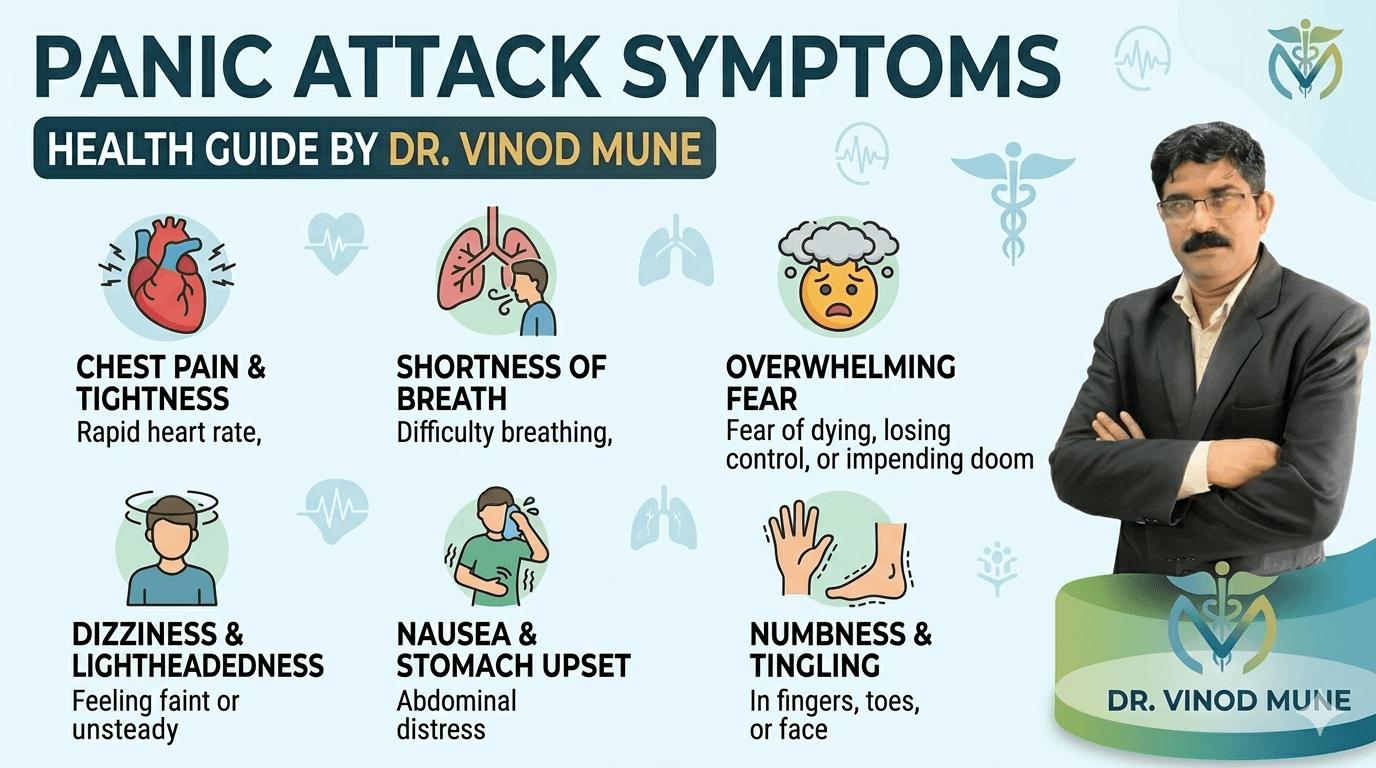
The body reacts intensely during a panic attack. Some of the most reported panic attack physical symptoms include:
Rapid heart rate or palpitations
Shortness of breath or choking sensation
Chest pain or discomfort
Sweating and chills
Trembling or shaking
Dizziness or lightheadedness
Nausea or abdominal distress
These signs of a panic attack can be so severe that individuals often seek emergency medical help, especially during their first episode.
Dr. Vinod Mune explains that these physical reactions are caused by a sudden surge of adrenaline. His clinical approach focuses on helping patients understand these responses rather than fear them, reducing the intensity over time. Anxiety and stress treatment services provide comprehensive support.
Emotional and Psychological Symptoms
Beyond physical sensations, panic attacks also involve strong emotional reactions. These include:
Intense fear or terror
Feeling detached from reality (derealization)
Fear of losing control
Fear of dying
Understanding how to recognize a panic attack involves identifying both physical and emotional cues together. Many patients report a sense of impending doom, even in safe environments.
At Dr. Vinod Mune’s clinic, patients are guided to track these emotional patterns. His combination of clinical psychology and hypnotherapy helps uncover underlying triggers that may not be consciously visible.
What Does a Panic Attack Feel Like?
To truly understand panic attack symptoms, it is important to explore what does a panic attack feel like from a real-world perspective.
Patients often describe it as:
“My heart was racing like I was running a marathon.”
“I felt like I couldn’t breathe.”
“I thought I was going to die.”
These experiences highlight how intense and real the symptoms feel. Even though panic attacks are not life-threatening, they can feel life-threatening in the moment.
Dr. Vinod Mune emphasizes that validating these experiences is crucial. His therapy sessions focus on helping individuals accept their feelings without judgment, which is a key step in recovery. Professional therapy services are available across multiple locations.
Panic Attack vs Anxiety Attack Symptoms
A common confusion arises between panic attack vs anxiety attack symptoms. While both involve stress responses, they differ in intensity and onset.
Panic attacks are sudden and intense
Anxiety attacks build gradually over time
Panic attack symptoms peak within minutes
Anxiety symptoms can last for hours or days
Understanding this distinction helps individuals how to recognize a panic attack accurately and seek the right treatment.
Dr. Vinod Mune uses structured assessments to differentiate between these conditions, ensuring precise diagnosis and effective therapy planning. Expert care in Baitul provides specialized assessment services.
Panic attack symptoms may be triggered by:
High stress levels
Trauma or past experiences
Genetic predisposition
Major life changes
Substance use (caffeine, drugs)
However, in many cases, panic attacks occur without a clear trigger. This unpredictability often increases fear and avoidance behavior.
Through his extensive clinical practice, Dr. Vinod Mune identifies that unresolved emotional conflicts often act as hidden triggers. His hypnotherapy techniques help access subconscious patterns contributing to these episodes.
How to Recognize a Panic Attack Early
Early recognition plays a critical role in managing panic attack symptoms. Key early signs of a panic attack include:
Sudden uneasiness
Increased heart rate
Rapid breathing
Feeling overwhelmed
Knowing how to recognize a panic attack allows individuals to apply coping techniques before symptoms escalate.
Dr. Vinod Mune trains patients in awareness techniques, helping them identify subtle changes in their body and mind. This proactive approach reduces the frequency and intensity of panic attacks over time. Expert services in Chandrapur provide comprehensive training.
Impact on Daily Life
Untreated panic attack symptoms can affect:
Work performance
Social interactions
Sleep quality
Overall mental health
Many individuals begin avoiding situations where panic attacks have occurred before, leading to restricted lifestyles and increased anxiety.
Dr. Vinod Mune’s therapy approach focuses on restoring confidence and normal functioning. His personalized sessions help patients gradually re-engage with life without fear. Professional therapy in Wardha supports life restoration.
Clinical Approach by Dr. Vinod Mune
As a highly trusted expert, Dr. Vinod Mune combines:
Scientific psychology
Advanced hypnotherapy
Holistic healing techniques
His mission is to provide long-lasting relief without dependency on medication. His work as the Best Psychologist and Hypnotherapist in Nagpur is supported by:
Training from the American School of Hypnosis (USA)
Expertise in anxiety, stress, and panic disorders
Thousands of successful patient outcomes
His integrated approach ensures that panic attack symptoms are not just managed but deeply understood and resolved. Expert services in Jabalpur provide comprehensive care.
Managing, Treating & Preventing Panic Attack Symptoms
Panic attack symptoms can be effectively managed and treated with the right combination of awareness, therapy, and lifestyle adjustments. While these episodes can feel overwhelming, modern psychological approaches—especially those practiced by experts like Dr. Vinod Mune—offer proven, long-term solutions.
Immediate Coping Techniques
When panic attack symptoms begin, immediate action can help reduce their intensity. Some effective techniques include:
Controlled Breathing
Slow, deep breathing helps regulate oxygen levels and calm the nervous system.
Grounding Techniques
Focusing on surroundings can reduce feelings of detachment. This is especially helpful in managing what does a panic attack feel like during intense moments.
Positive Self-Talk
Reminding yourself that the symptoms are temporary can reduce fear.
Dr. Vinod Mune trains patients in these techniques as part of his therapy sessions, ensuring they have practical tools to handle real-life situations. Psychology centers in Nagpur provide comprehensive training.
Long-Term Treatment Options
Managing panic attack symptoms requires consistent effort and professional guidance.
Cognitive Behavioral Therapy (CBT)
CBT helps identify and change negative thought patterns contributing to panic attacks. Cognitive behavioral therapy provides structured treatment approaches.
Hypnotherapy
Dr. Vinod Mune’s specialization in hypnotherapy allows access to subconscious triggers, making it highly effective for long-term healing. Specialized treatment services address complex conditions.
Lifestyle Modifications
Regular exercise
Healthy diet
Adequate sleep
Reduced caffeine intake
These changes significantly reduce panic attack physical symptoms over time.
How to Recognize a Panic Attack Pattern
Understanding patterns is essential in prevention. Individuals should track:
Frequency of episodes
Triggers
Duration
Physical sensations
This data helps in how to recognize a panic attack early and take preventive steps.
Dr. Vinod Mune encourages journaling and behavioral tracking, which improves self-awareness and control. Professional services in Guwahati provide pattern recognition training.
From a treatment standpoint, panic attack vs anxiety attack symptoms require slightly different approaches.
Panic attacks need immediate symptom control
Anxiety attacks require long-term stress management
Dr. Vinod Mune customizes therapy based on individual needs, ensuring precise and effective care. Professional therapy in Akola provides customized treatment plans.
Role of Hypnotherapy in Healing
Hypnotherapy is a powerful tool in treating panic attack symptoms. It works by:
Accessing subconscious beliefs
Reducing fear responses
Reprogramming negative thought patterns
With over 10,000 therapy sessions, Dr. Vinod Mune has successfully used hypnotherapy to treat complex cases where traditional methods failed. Professional services in Lucknow offer advanced hypnotherapy.
Preventing Future Panic Attacks
Prevention focuses on reducing vulnerability to triggers.
Stress Management
Regular relaxation techniques reduce overall anxiety levels.
Emotional Awareness
Understanding emotional responses helps in early intervention.
Professional Support
Continuous guidance ensures long-term stability.
As the Best Psychologist and Hypnotherapist in Nagpur, Dr. Vinod Mune provides ongoing support, ensuring patients maintain progress even after recovery. International services in Abu Dhabi provide global support.
Real-World Case Insight
A patient experiencing severe panic attack physical symptoms visited Dr. Vinod Mune after multiple emergency visits. Through hypnotherapy and structured counseling:
Panic frequency reduced within weeks
Fear of symptoms decreased
Confidence restored
This highlights the importance of expert intervention and personalized treatment. Professional care in Dubai provides similar success outcomes.
When to Seek Help
Professional help is necessary if:
Panic attacks occur frequently
Symptoms interfere with daily life
Avoidance behavior develops
Early treatment prevents complications and ensures faster recovery.
Dr. Vinod Mune’s clinic offers trusted care with a patient-first approach, focusing on deep healing rather than temporary relief. Specialized treatment in Bramhapuri provides comprehensive care.
Follow Dr. Vinod Mune on Social Media
📱 +91 9890478286
💻 Online Consultation Available
📍 View Clinic Location & Reviews
FAQs – Panic Attack Symptoms
What are the most common panic attack symptoms?
Common panic attack symptoms include rapid heartbeat, shortness of breath, dizziness, chest pain, and intense fear. These symptoms peak quickly and feel overwhelming.
What does a panic attack feel like physically?
What does a panic attack feel like physically includes chest tightness, sweating, shaking, and difficulty breathing, often mistaken for a heart attack.
How to recognize a panic attack early?
How to recognize a panic attack involves noticing sudden fear, rapid breathing, and physical discomfort without a clear cause.
What are the key signs of a panic attack?
The main signs of a panic attack include intense fear, heart palpitations, dizziness, and a sense of losing control.
Panic attack vs anxiety attack symptoms – what’s the difference?
Panic attack vs anxiety attack symptoms differ in intensity and onset. Panic attacks are sudden, while anxiety builds gradually.
Are panic attack physical symptoms dangerous?
Panic attack physical symptoms are not dangerous but can feel severe. They are caused by the body’s stress response.
Can hypnotherapy help panic attack symptoms?
Yes, hypnotherapy—especially as practiced by Dr. Vinod Mune—helps address subconscious triggers and provides long-term relief.
How long do panic attack symptoms last?
Panic attack symptoms usually peak within 10 minutes and gradually subside within 20–30 minutes.
What triggers panic attack symptoms?
Triggers include stress, trauma, caffeine, and major life changes, though some attacks occur without a clear cause.
When should I see a psychologist for panic attack symptoms?
You should consult an expert like Dr. Vinod Mune if panic attacks are frequent, severe, or affecting daily life.
Ready to overcome panic attack symptoms with expert help?
Contact us today for professional consultation and treatment.
🧠 Specialized Mental Health Services
Comprehensive mental health treatment options:
🌐 Additional Professional Services
Comprehensive therapy and assessment services:
🎓 Training and Development
Professional training and certification programs:
🔬 Advanced Treatment Options
Specialized treatment approaches and programs:
📊 Assessment and Analysis
Professional assessment and therapeutic services: