
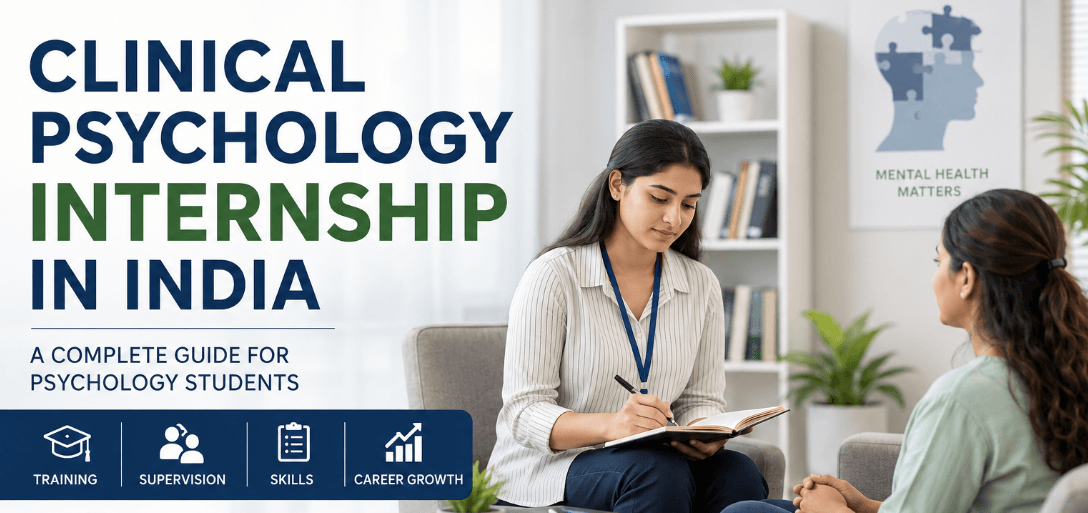
Clinical Psychology Internship in India: A Practical Guide to Training, Skills, Supervision, and Career Growth
A clinical psychology internship in India can be an important step for students who want practical exposure to psychological assessment, counseling, clinical observation, documentation, and ethical professional practice. Academic learning provides the theoretical foundation, but supervised field experience helps students understand how psychological concepts are applied when working with real people.
For students exploring a psychologist internship in India, it is important to distinguish between general psychology internships and placements designed specifically around clinical psychology. The responsibilities, supervision requirements, professional boundaries, and eligibility expectations can differ considerably. Find professional guidance from Dr. Vinod Mune, best psychologist in Nagpur.
📋 Table of Contents
- → What Is a Psychology Internship?
- → Why Practical Training Matters
- → What Students Can Learn
- → Understanding Ethical Boundaries
- → Who Can Consider an Internship?
- → Choosing the Right Internship
- → The Role of Dr. Vinod Mune
- → Building a Successful Internship Experience
- → Career Benefits
- → Frequently Asked Questions
What Is a Clinical Psychology Internship?
A psychology internship in India generally provides supervised exposure to areas such as psychological interviewing, behavioral observation, case-history taking, counseling skills, psychological assessment, clinical documentation, and mental-health education. Students may encounter people experiencing concerns such as anxiety, depression, relationship difficulties, sleep problems, or behavioral concerns.
⚠ Important: An intern should never assume that observing a case automatically gives them authority to diagnose or independently treat a client. A responsible psychology internship in India emphasizes learning under supervision with clearly defined responsibilities.
Why Practical Training Matters
Psychology students often learn theories of personality, learning, cognition, developmental psychology, psychopathology, and counseling in classrooms. A psychology internship in India allows these concepts to become tangible through structured observation and supervised practice. A good internship teaches students not to reduce every client to a diagnostic label — interns learn to consider history, context, functioning, relationships, coping mechanisms, environmental stressors, and the individual’s own understanding of their difficulties.

What Students Can Learn During an Internship
Clinical Interviewing
Interviewing is one of the foundational skills in psychology. Students can learn how professionals establish rapport, ask open-ended questions, clarify information, identify relevant history, and maintain professional boundaries. An effective interview requires careful listening and avoiding premature conclusions.
Case History and Documentation
Good documentation distinguishes between what the client reports, what the professional observes, and what has been clinically assessed. Clear records support continuity of care and reduce the possibility of misunderstanding.
Psychological Assessment
Students can learn about the purpose of assessment, test selection, administration principles, scoring, interpretation, and limitations. Psychological tests should not be treated as simple questionnaires, and students should not independently administer restricted instruments without appropriate training and authorization.
Counseling Skills
A psychology internship in India can introduce students to active listening, empathy, reflection, clarification, appropriate questioning, and maintaining therapeutic boundaries. Professional psychological work requires structured methods, ethical practice, and appropriate boundaries. Understanding Cognitive Behavioral Therapy principles forms an important part of this learning.
Understanding Ethical Boundaries
Ethics should be a core part of every clinical psychology internship in India. Students may encounter highly personal information involving family relationships, trauma, emotional difficulties, medical history, or other sensitive subjects. Such information must be handled responsibly.
- Never share identifiable client information on social media
- Do not discuss cases casually with friends or family
- Avoid photographing confidential documents
- Never use client experiences as promotional material without authorization
- Understand when safety concerns require escalation to qualified professionals
Internship Versus Independent Clinical Practice
A common misunderstanding among students searching for a psychology internship in India is that internship experience automatically qualifies them to practice independently. It does not. An internship is a supervised learning experience. Professional practice depends on educational qualifications, applicable regulations, professional registration requirements, scope of competence, and the nature of the services being provided.
Who Can Consider a Psychology Internship?
Eligibility varies by organization and program. Undergraduate psychology students may seek observational or introductory placements, while postgraduate students may be eligible for more advanced supervised exposure. A clinical psychology internship in India should match the student’s current level of education and competency. Students should never exaggerate their qualifications when communicating with clients or organizations. Find nearby options at nearest psychology centers in Nagpur.
Choosing the Right Internship
Supervisor qualifications clearly stated
Learning objectives defined
Case exposure appropriate to training level
Ethics, confidentiality, and consent taught
Documentation practices included
Constructive feedback provided
Certificate reflects actual training
Scope distinguished from independent practice
The Role of Dr. Vinod Mune in Student Learning
For students exploring a psychologist internship in India, Dr. Vinod Mune’s profile as one of the top psychologists in Nagpur offers an example of how psychological practice can involve several areas of mental-health work. His work includes anxiety, stress, OCD, sleep-related concerns, relationship issues, child psychology, and hypnotherapy.
Dr. Vinod Mune — Clinical Psychologist & Master Hypnotherapist
PhD (Psychology – Pursuing) · MA (Clinical Psychology) · MSc (Psychology) · BEMS · ND · LLB
Trained at American School of Hypnosis, USA · 15+ Years Practice · 10,000+ Sessions
For internship learners, the key educational value is understanding how different approaches are discussed, when psychological intervention is appropriate, how client concerns are explored, and why professional judgment must remain evidence-informed and ethically responsible. A clinical psychology internship in India should ultimately help students develop humility as well as confidence.
How to Build a Successful Clinical Psychology Internship Experience in India
Developing Professional Communication
Communication is a core skill in a clinical psychology internship in India. A psychologist must communicate with clients in language that is understandable, respectful, and appropriate to their circumstances. Students should learn to avoid unnecessary jargon and recognize how tone, pacing, listening, and non-verbal communication influence professional interactions.
Learning to Think Clinically
Clinical thinking is not simply memorizing diagnostic criteria. During a clinical psychology internship in India, students should learn to organize information systematically: What brought the person for help? When did the concern begin? What factors may be contributing? How does it affect daily functioning? Are there risks that require immediate attention?
Exposure to Different Psychological Concerns
One advantage of psychology internship programs is the possibility of seeing how different psychological concerns present in real-world settings — anxiety-related concerns, depressive symptoms, obsessive thoughts or behaviors, relationship difficulties, sleep problems, or child and adolescent behavioral concerns. Exposure should always be appropriate to the intern’s training level.

Supervision Is the Foundation
The quality of supervision is one of the most important factors in a clinical psychology internship in India. A supervisor can help a student understand mistakes, identify gaps in knowledge, and develop appropriate professional behavior. Students should actively seek feedback — constructive criticism is part of professional development, not a sign of failure.
Career Benefits of a Good Internship
A meaningful clinical psychology internship in India can strengthen professional communication, develop familiarity with clinical environments, deepen understanding of ethical responsibilities, and help students identify areas they may wish to study further. Someone initially interested in general counseling may discover an interest in child psychology, while another may become more interested in assessment or research.
💡 What to Avoid: Be cautious of programs that make unrealistic promises — guaranteed employment based solely on internship completion, claims that a short course makes someone a licensed clinical professional, or pressure to independently counsel clients without adequate supervision.
How to Make the Most of an Internship
Frequently Asked Questions
What is a clinical psychology internship in India?
A clinical psychology internship in India is a supervised educational experience that exposes psychology students to clinical environments, interviewing, observation, documentation, psychological assessment concepts, counseling skills, ethics, and professional communication. The exact activities depend on the student’s qualifications and the internship provider.
Who can apply for a psychologist internship in India?
Eligibility varies by organization. Undergraduate and postgraduate psychology students may find different types of opportunities. Students should check the internship provider’s educational requirements and confirm whether the training satisfies their university or course requirements.
What should I learn during a clinical psychology internship?
A clinical psychology internship in India should ideally develop practical understanding of interviewing, case-history taking, observation, documentation, ethics, professional communication, assessment principles, referral, and supervised counseling skills.
Are psychology internship programs useful for career development?
Yes. Quality psychology internship programs can help students understand professional environments, strengthen communication skills, explore specializations, and make informed decisions about further education. They should complement formal academic and professional training rather than replace it.
Can an intern diagnose clients independently?
Generally, students should not independently diagnose or treat clients beyond their training and authorization. A clinical psychology internship in India should operate under appropriate supervision, with responsibilities clearly defined according to the trainee’s education and applicable professional requirements.
How do I find good psychology internship opportunities?
When evaluating psychology internship opportunities, check the supervisor’s qualifications, learning objectives, supervision structure, ethical policies, case exposure, eligibility requirements, feedback process, and whether the certificate accurately represents the training completed.
What areas can students observe during an internship with Dr. Vinod Mune?
Based on the professional information provided, Dr. Vinod Mune works across areas including anxiety and stress, depression, OCD, sleep disorders, relationship issues, child psychology, and hypnotherapy. The exact exposure available to an intern depends on the specific training arrangement.
Is hypnotherapy part of clinical psychology?
Hypnotherapy and clinical psychology are not synonymous. Hypnotherapy is an intervention approach that may be used in certain contexts, while clinical psychology is a broader professional field involving assessment, formulation, intervention, research, and psychological care.
Does completing an internship make someone a clinical psychologist?
No. Completing a clinical psychology internship in India does not by itself confer professional status or registration as a clinical psychologist. Students must meet the applicable educational, regulatory, and registration requirements before independently practicing within a regulated professional role.
What makes a clinical psychology internship valuable?
The strongest clinical psychology internship opportunities provide qualified supervision, ethical guidance, appropriate case exposure, structured learning, feedback, and opportunities to connect academic psychology with real-world professional practice. The objective should be genuine competency development rather than simply obtaining a certificate.