
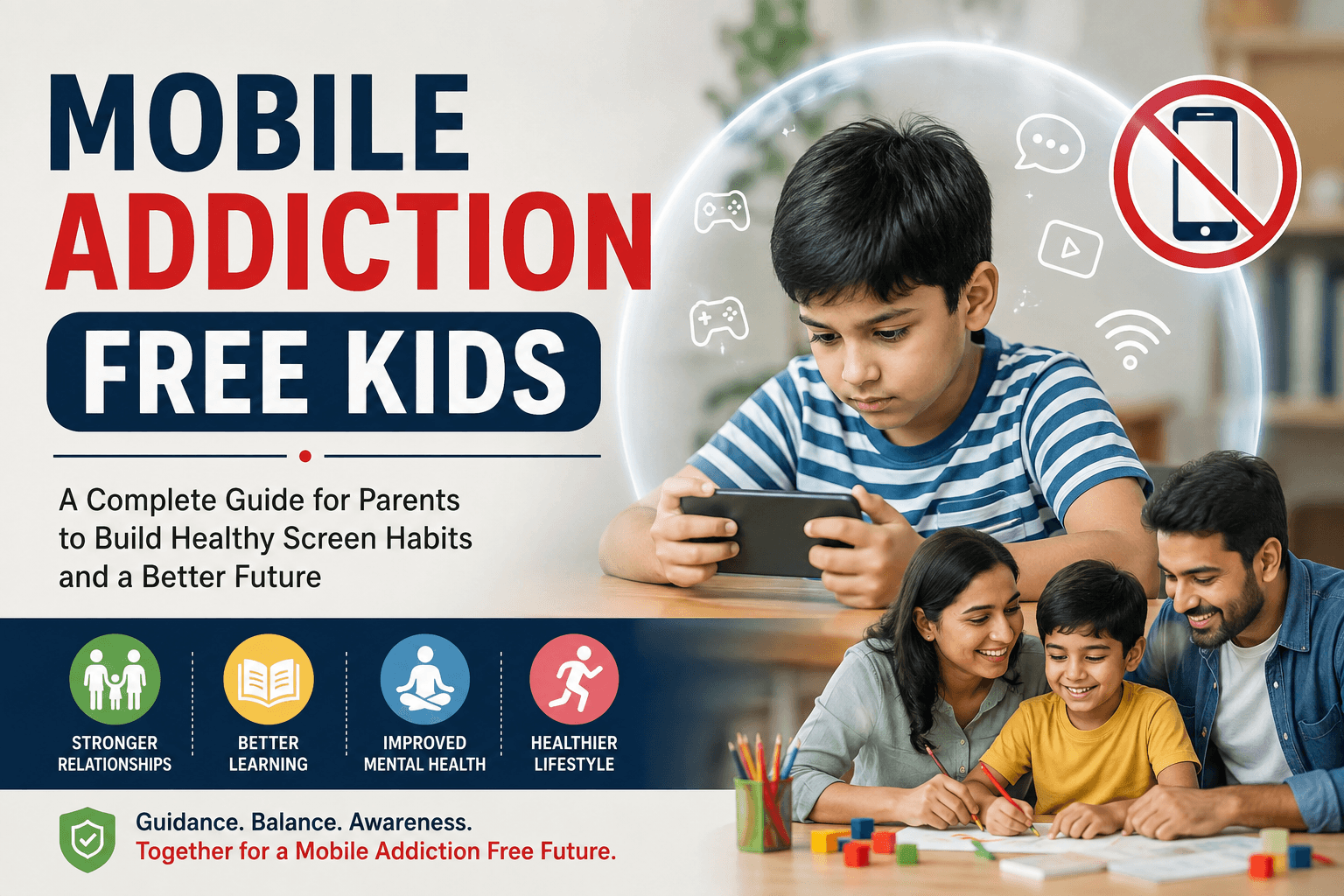
Mobile Addiction Free Kids
Mobile Addiction Free Kids is an important goal for parents who want children to develop healthy attention, sleep, social, emotional, and learning habits. Smartphones and tablets can be useful educational tools, but excessive or uncontrolled use can become a difficult family issue. The goal is not to remove technology entirely — it is to create an environment where children learn to use digital devices consciously, safely, and in moderation. For families concerned about mobile addiction in children, understanding why excessive screen use develops is the first step. Explore professional mobile addiction solution in Nagpur for expert guidance.
📋 Table of Contents
- → What Is Mobile Addiction in Children?
- → Why Children Become Attached to Smartphones
- → Effects of Mobile Phones on Children
- → How to Reduce Screen Time for Kids
- → Practical Strategies for Raising Mobile Addiction Free Kids
- → A Practical Seven-Day Reset
- → When to Seek Professional Support
- → Frequently Asked Questions
Understanding Mobile Addiction in Children and Building Healthier Habits
What Is Mobile Addiction in Children?
Mobile Addiction in Children generally refers to a pattern in which a child repeatedly seeks smartphone use, finds it difficult to stop, becomes distressed when access is restricted, and continues using the device despite negative effects on everyday life. Parents should be careful about labeling every child who enjoys a phone as “addicted.” Professionals look at the broader pattern: loss of control, interference with sleep and education, withdrawal from family or activities, emotional changes, and persistent difficulty reducing use.
Why Children Become Attached to Smartphones
Modern mobile applications are designed to capture attention through short videos, games, notifications, rewards, and continuously changing content. Children are particularly vulnerable because self-regulation and impulse-control abilities continue developing throughout childhood and adolescence. Contributing factors include boredom, loneliness, academic stress, anxiety, difficulty sleeping, family conflict, easy device access, and lack of consistent household boundaries. Creating Mobile Addiction Free Kids requires understanding what the device is providing emotionally or behaviorally. For anxiety-related causes, see anxiety and stress treatment in Nagpur.
Effects of Mobile Phones on Children
The Effects of Mobile Phones on Children depend on duration, content, timing, age, and individual vulnerability. Excessive recreational screen use can interfere with sleep, physical activity, family interaction, school responsibilities, concentration, and face-to-face social experiences. Attention concerns may also benefit from ADHD treatment in Nagpur when attention difficulties are present alongside screen overuse.
Warning signs parents should watch for:
How to Reduce Screen Time for Kids
How to Reduce Screen Time for Kids should begin with realistic, consistent changes rather than sudden punishment. Start by identifying when and why the child uses the phone. Keep a simple record for several days noting whether usage occurs before school, during meals, after homework, during boredom, or late at night. Then establish predictable device rules:
🍵 No Phones During Meals
Family meal times stay phone-free for everyone including parents
👀 Devices Outside Bedrooms
Charge devices outside bedrooms at bedtime to protect sleep
📚 Homework First
Homework completed before any recreational gaming or videos
🔔 Reduce Notifications
Disable unnecessary notifications to reduce compulsive checking
🕑 Agreed Screen Periods
Parents and children agree on recreational screen time windows
👷 Model the Behavior
Parents follow the same rules they expect from children
Kids Screen Time Management Should Be a Family Practice
Kids Screen Time Management works best when treated as a household habit rather than a punishment directed only at children. Parents should examine their own device behavior. If adults spend every meal checking messages, children naturally perceive constant phone use as normal. A family technology plan can include device-free meals, outdoor activities, reading periods, family conversations, and consistent bedtime routines. For mobile addiction related to family stress, stress counselling in Nagpur can also help.
Ways to Keep Kids Away From Mobile Phones Without Constant Conflict
The most effective Ways to Keep Kids Away From Mobile Phones usually involve structure, connection, and alternatives. Parents can keep recreational devices in shared spaces, avoid using smartphones as the automatic solution for boredom, establish regular outdoor play, create family routines without screens, encourage hobbies based on the child’s interests, and praise children when they successfully follow agreed boundaries.
💡 Key Insight: Parents should avoid humiliating or frightening children about phone use. Shame creates secrecy instead of healthier behavior. Cooperation is more sustainable than an endless cycle of taking the phone away and giving it back.
Practical Strategies for Raising Mobile Addiction Free Kids
Create a Family Technology Agreement
One practical approach is creating a written family technology agreement that defines where phones can be used, when recreational use is permitted, device-free meal times, bedtime charging locations, homework expectations, gaming limits, and consequences for breaking agreed rules. Children should participate in creating these rules when their age allows — participation increases understanding and responsibility.
Replace Screen Time With Meaningful Experiences
One of the strongest ways to keep kids away from mobile phones is providing alternatives that children actually enjoy. A child who loves competition may enjoy football, cricket, swimming, or martial arts. A creative child may prefer drawing, photography, music, or crafts. Parents can introduce a daily “choice menu” where children select an offline activity before receiving recreational screen time.
Encourage Physical Activity
Physical activity is an important part of healthy childhood development. Parents can schedule outdoor play rather than waiting for children to spontaneously leave their devices. Walking, cycling, sports, playground activities, and family outings provide natural breaks from screens and address the broader Effects of Mobile Phones on Children by displacing sedentary habits.
Protect Sleep
Sleep should receive special attention when addressing Mobile Addiction Free Kids. Children require substantial sleep for healthy development, learning, mood regulation, and everyday functioning. A practical routine is to establish a technology-free wind-down period before sleep and charge devices outside the bedroom.
Teach Children Self-Regulation
The ultimate goal of Mobile Addiction Free Kids is to help children gradually develop their own ability to regulate technology use. Parents can teach children to recognize questions such as: “Am I using this because I need it or because I am bored?” and “Is this affecting my sleep?” These questions encourage awareness rather than blind obedience.

Avoid Making the Phone the Main Emotional Comfort Tool
Some children learn to associate smartphones with immediate relief from difficult emotions. Parents can instead teach breathing exercises, conversation, drawing, physical activity, quiet time, or asking for support. For Mobile Addiction Free Kids, emotional skills are just as important as screen limits.
A Practical Seven-Day Reset
What Parents Should Avoid
Parents should avoid using humiliation, threats, physical punishment, or extreme restrictions as their primary strategy. They should also avoid assuming that every behavioral problem is caused by the phone. A child may use a phone excessively because they are experiencing loneliness, anxiety, academic pressure, or family difficulties. Removing the phone without addressing that concern may simply cause the behavior to shift elsewhere.
When to Seek Support in Nagpur
Mobile Addiction in Children can sometimes exist alongside persistent anxiety, low mood, social withdrawal, sleep disruption, academic decline, aggression, or significant family conflict. In these cases, a professional assessment becomes important. Dr. Vinod Mune is a psychologist and master hypnotherapist in Nagpur with more than 15 years of professional practice and 10,000+ sessions. For depression concerns alongside screen overuse, see depression therapy in Nagpur. Find nearest psychology centers in Nagpur for convenient professional consultation.
Dr. Vinod Mune — Child Psychology & Hypnotherapy, Nagpur
PhD (Psychology – Pursuing) · MA (Clinical Psychology) · MSc (Psychology) · BEMS · ND · LLB
Master Hypnotherapist — American School of Hypnosis, USA · 15+ Years · 10,000+ Sessions
⚠ Seek urgent help if a child’s behavior involves serious safety concerns, severe emotional distress, self-harm risk, or significant deterioration in daily functioning. Do not rely on household strategies alone in these situations.
Frequently Asked Questions
What does Mobile Addiction Free Kids mean?
Mobile Addiction Free Kids refers to children who have a healthy, balanced relationship with smartphones rather than allowing recreational phone use to interfere with sleep, education, physical activity, relationships, or emotional well-being.
What are the signs of Mobile Addiction in Children?
Possible warning signs include difficulty stopping, intense distress when access is restricted, secretive use, disrupted sleep, declining school responsibilities, reduced offline activities, and persistent use despite negative consequences.
How to Reduce Screen Time for Kids effectively?
Begin by tracking usage, establishing predictable limits, protecting sleep, removing unnecessary notifications, and replacing screen time with enjoyable offline activities. Rules work best when children understand the reason behind them.
What are the Effects of Mobile Phones on Children?
The Effects of Mobile Phones on Children vary depending on content and usage patterns. Excessive recreational use may interfere with sleep, physical activity, family interaction, concentration, and other important developmental activities.
How can parents improve Kids Screen Time Management?
Kids Screen Time Management improves when families establish clear rules around meals, homework, bedtime, gaming, and recreational use. Parents should follow the same household rules themselves to model the behavior they expect.
What are practical Ways to Keep Kids Away From Mobile Phones?
Useful Ways to Keep Kids Away From Mobile Phones include encouraging sports, hobbies, outdoor activities, reading, creative projects, family activities, and device-free routines rather than relying exclusively on punishment.
Should parents completely ban smartphones?
A complete ban is not always necessary or practical. A better approach for many families is age-appropriate access, clear boundaries, parental supervision, safe content, and gradually teaching responsible technology use.
Can a psychologist help with Mobile Addiction in Children?
Yes. A psychologist can assess the behavior and determine whether excessive phone use is primarily a habit or connected with anxiety, stress, sleep problems, emotional difficulties, family conflict, or another concern requiring professional intervention.
Can hypnotherapy help children with excessive phone use?
Hypnotherapy should not be presented as a guaranteed cure. When appropriate and delivered by a qualified professional, it may be considered as a complementary approach within an individualized psychological treatment plan.
When should parents consult Dr. Vinod Mune?
Parents may consider professional guidance when attempts to reduce device use repeatedly fail or when excessive use is associated with significant anxiety, mood changes, sleep problems, school difficulties, social withdrawal, or serious family conflict. Dr. Vinod Mune provides psychological and hypnotherapy services in Nagpur across child psychology, anxiety, stress, and sleep-related concerns.