Intrusive thoughts treatment in Nagpur is one of the most common reasons people with OCD finally ask for help. An intrusive thought is an unwanted idea, image or urge that pops into your mind without warning. It may be violent, sexual, blasphemous or about harm coming to someone you love. Having such thoughts does not make you a bad person. In fact, almost everyone has them at times. The difference is that with OCD, the mind gets stuck on them. The National Institute of Mental Health explains that obsessions and compulsions can take up hours of the day and cause real distress.
This guide explains why intrusive thoughts happen, how treatment works, and what you can do at home. It is written from the practice of Dr. Vinod Mune, a clinical psychologist at the Mind Healing Clinic in Nagpur.
What Is Intrusive Thoughts Treatment in Nagpur?
Intrusive thoughts treatment is a structured plan that teaches your mind to stop fighting unwanted thoughts. At first, this sounds strange. However, the fight itself keeps the thoughts alive. The more you push a thought away, the louder it returns. So, treatment focuses on changing your reaction, not on deleting the thought.
Typical intrusive thoughts include these:
- Fear of hurting a child, partner or parent, although you never would
- Doubts such as “did I lock the door?” or “did I turn off the gas?”
- Fear of germs, dirt or illness
- Unwanted sexual or religious images
- A need for things to feel “just right” or perfectly even
- Fear of saying or doing something shameful in public
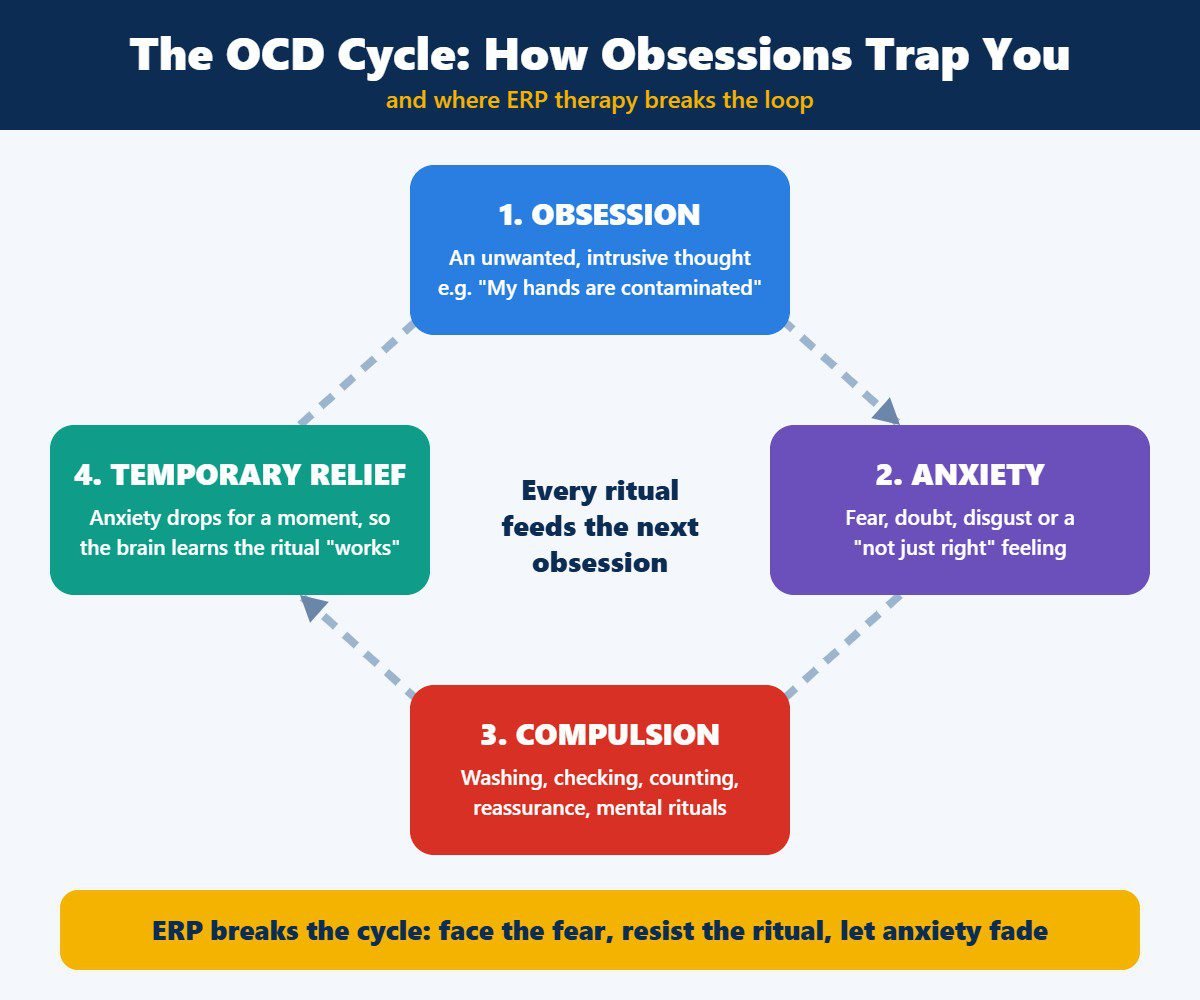
Most people then try to cancel the fear with a ritual. For example, they wash again, check again, count, pray or ask others for reassurance. These rituals bring short relief, but they feed the cycle. If this pattern sounds familiar, our guide on anxiety vs depression vs OCD can help you tell them apart.
Why Do Intrusive Thoughts Happen?
There is rarely one cause. Instead, several factors combine. These include family history, high stress, perfectionism, a strong sense of responsibility, past trauma and changes in brain chemistry. In addition, poor sleep and long periods of worry make the thoughts feel louder. Because causes differ from person to person, a proper assessment is the first step.
Intrusive Thoughts Treatment Options in Nagpur
Good care usually combines more than one approach. Here are the main ones.
1. ERP therapy. Exposure and response prevention is the gold standard for OCD. First, you face a feared thought or situation in small, planned steps. Next, you resist the urge to perform the ritual. Over time, the anxiety falls on its own. You can read more in our guide to ERP therapy in Nagpur.
2. Cognitive behavioural therapy. CBT helps you see that a thought is only a thought, not a fact or a warning. It also builds the skill of letting thoughts pass without answering them. See how it works in CBT in Nagpur.
3. Hypnotherapy as a support. Hypnotherapy uses deep relaxation and focused suggestion. For instance, it can lower the stress that feeds obsessions and improve sleep. It works best as an add-on to ERP or CBT, not as a replacement. Learn more about hypnotherapy in Nagpur.
4. Medicine from a psychiatrist. For moderate to severe OCD, a psychiatrist may prescribe medicine. A psychologist cannot prescribe it, but can work as a team with your psychiatrist. Never stop medicine suddenly.
For a full overview of care, read our OCD treatment guide or the page on OCD counselling in Nagpur.
Self-Help Steps Alongside Intrusive Thoughts Treatment
Therapy works faster when you practise between sessions. Try these steps:
- First, label the thought: say “this is an intrusive thought” instead of arguing with it.
- Next, do not seek reassurance from family or search the internet for answers.
- Also, delay your ritual by five minutes, then ten, and slowly stretch the gap.
- Practise slow breathing to calm the body. Our breathing exercises guide shows simple methods.
- In addition, keep a fixed sleep time and walk daily.
When Should You See a Psychologist?
Do not wait if the thoughts or rituals take more than an hour a day, harm your work or study, or strain your family life. Similarly, seek help if you feel ashamed, hopeless or afraid of your own mind. Early help leads to faster recovery. However, if you ever have thoughts of ending your life, go to the nearest hospital at once or call the Tele-MANAS helpline at 14416. If you are unsure whom to meet, our checklist to choose a psychologist will guide you.
Frequently Asked Questions
Do intrusive thoughts mean I will act on them?
No. In fact, people with OCD are usually the least likely to act on such thoughts, because they find them disturbing.
How long does treatment take?
It varies. Many people notice gains in six to twelve weeks, and a full course often lasts a few months.
Can OCD be cured?
OCD is very treatable. Most people learn to keep symptoms low and live freely, especially with ERP.
Are online sessions effective?
Yes. Online therapy also works well and suits people who prefer privacy or live outside the city.
Is my information kept private?
Yes. Sessions at the clinic are fully confidential.
Take the First Step Today
You do not have to live with unwanted thoughts. A first conversation can bring clarity and relief. Call or WhatsApp +91 98904 78286, or send a message from the contact page. You can also view the full list of treatments at the clinic in Renuka Vihar, Beltarodi Road, Nagpur.
Disclaimer: this article is for general information. It is not a diagnosis or a substitute for professional medical advice.