
Breathing Coach in Nagpur: How Conscious Breathing Reaches the Subconscious Mind
Finding a breathing coach in Nagpur who understands both the body and the mind can change how you handle stress, sleep and daily pressure. Breath is the one automatic function you can also control on purpose, which makes it a rare doorway between conscious effort and the subconscious nervous system. Dr. Vinod Mune, a clinical psychologist and master hypnotherapist with more than 15 years of practice, uses that doorway to help people settle racing thoughts without depending on medication.

📋 Table of Contents
- → What a Breathing Coach in Nagpur Actually Does
- → The Science Linking Breath, Brain and Nervous System
- → Subconscious Breathing: The Pattern You Never Chose
- → Dr. Vinod Mune's Experience in Breathwork and Hypnotherapy
- → Guided Breathing Sessions in Nagpur: What to Expect
- → Breathwork for Stress and Anxiety in Nagpur: Techniques That Help
- → Breathing Therapy in Nagpur and Hypnotherapy
- → Who Should Take Care Before Starting
- → How to Choose a Breathwork Coach in Nagpur
- → Building a Home Practice Between Sessions
- → Book a Session With Dr. Vinod Mune
- → Frequently Asked Questions
What a Breathing Coach in Nagpur Actually Does
A breathing coach teaches you to notice, slow and reshape how you breathe, then links that skill to the situations that unsettle you. Good coaching is not a list of techniques copied from a video. It starts with observation: how fast you breathe at rest, whether your chest or belly moves, how often you sigh or hold your breath, and what happens to your breathing when you think about a deadline or an argument.
Many people who arrive with anxiety, poor sleep or constant tension are surprised by what this shows. Their breathing is quick, shallow and high in the chest even while they sit quietly. The body has learned a pattern of mild alarm, and the pattern now runs on its own. A breathwork coach in Nagpur who is also trained in psychology can trace that pattern to its triggers instead of only correcting the mechanics.
Why Psychology-Trained Coaching Makes the Difference
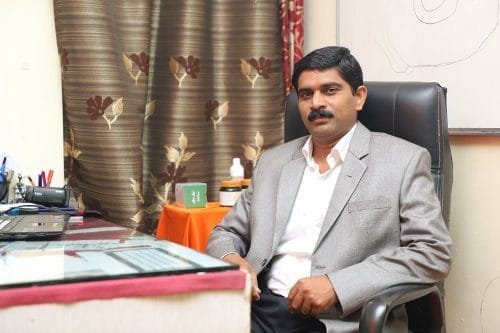
That is where Dr. Vinod Mune's background counts. His qualifications include an MA in Clinical Psychology, an MSc in Psychology and a PhD in Psychology currently in progress, plus master hypnotherapy training at the American School of Hypnosis in the USA. Someone who learns breathing exercises in Nagpur from a clinician with this grounding receives technique and context together: which exercise suits which problem, and when breathing alone is not enough.
👨⚕️ Dr. Vinod Mune – Clinical Psychologist & Master Hypnotherapist
PhD (Psychology) – Pursuing · MA (Clinical Psy) · MSc (Psy) · BEMS · ND · LLB
15+ years of practice · 10,000+ sessions · Trained at the American School of Hypnosis, USA
The Science Linking Breath, Brain and Nervous System
How Slow Breathing Calms the Nervous System
The rhythm of breathing is generated in the brainstem, in a region called the preBötzinger Complex. It does not work alone. Mapping studies show that this region receives signals from areas involved in arousal, stress and sleep, which explains why your breath changes when you are frightened, in pain or drifting off. The influence also travels the other way: deliberate slow breathing sends calming information back up to the brain.
Slow breathing increases vagal activity and heart rate variability and shifts the balance toward the parasympathetic, or rest-and-digest, branch of the nervous system. A 2018 systematic review in Frontiers in Human Neuroscience, led by Zaccaro and colleagues, associated slow breathing practices with greater comfort, relaxation and alertness, and with lower anxiety, depression and anger. In 2023, Balban and colleagues at Stanford reported in Cell Reports Medicine that five minutes of daily breathing practice, especially cyclic sighing, improved mood and lowered resting breathing rate more than mindfulness meditation did over one month.
Carbon Dioxide, Over-Breathing and the Panic Loop
Carbon dioxide adds another layer. Habitual over-breathing washes out too much of it, and the result can be dizziness, tingling, chest tightness and a sense of unreality. These sensations resemble panic, so the person becomes more frightened, breathes faster and deepens the cycle. Teaching someone to breathe slower and lighter interrupts the loop at its physical source. That is the logic behind responsible breathing therapy in Nagpur: it works with measurable physiology, not mystery.
What Research Can and Cannot Promise
It is worth being clear about limits. Trials of breathing practices are often small and short, and results vary between people. Breathwork supports mental health care; it does not replace diagnosis or treatment for a clinical condition.
Subconscious Breathing: The Pattern You Never Chose
An adult breathes well over fifteen thousand times a day, and almost none of those breaths receive attention. Like posture or the way you hold a pen, breathing habits are learned and then handed to the subconscious. A child raised in a tense home, a student under exam pressure or a professional living on deadlines can all carry a breathing pattern formed years ago that still signals danger when there is none.
Conscious breathwork works because it temporarily brings that pattern into awareness, where it can be changed. Repetition then does the rest, until the new rhythm becomes the default. This is why a breathing coach in Nagpur with hypnotherapy training has a real advantage. Hypnotherapy uses relaxed, focused attention to work with habits and beliefs that sit below everyday awareness. Dr. Mune's stated mission is deep, lasting healing through modern psychology combined with holistic therapies, and his clinic's approach is built on understanding the root cause of a problem before designing a practical solution. For breathing, that means asking not only how you breathe but why your body learned to breathe that way. You can read more on his subconscious breathing page.
Dr. Vinod Mune's Experience in Breathwork and Hypnotherapy
With 15+ years in practice and more than 10,000 sessions behind him, Dr. Mune has worked with anxiety and stress, depression, OCD, sleep disorders, relationship difficulties and child psychology. That range shapes how a breathing coach in Nagpur should use breath. A student with exam anxiety needs different pacing from a person with disturbed sleep, and someone with a history of panic needs a gentler start than someone seeking general calm. His additional training in naturopathy and acupuncture supports a whole-person view, in which breathing sits beside sleep, diet, thought habits and relationships instead of being treated as an isolated trick.
A clinical framework also matters for safety. A practitioner who works within one knows when to slow down, when to stop and when to refer a person elsewhere.

An Illustrative Example: Chest Tightness and 3 a.m. Wake-Ups
The following is an illustrative composite based on common presentations, not a real client record. A software professional in Nagpur reports tightness in the chest before every meeting and wakes at 3 a.m. with a racing mind. Observation shows a resting rate of about twenty breaths a minute, with the upper chest doing most of the work. Over several weeks of guided practice, the person learns to lengthen the exhale, breathe through the nose and lower the breath into the belly. The early-morning wake-ups become shorter, then less frequent.
Alongside the breathing, counselling identifies a belief, "if I relax, I will fall behind," that had been keeping the body on alert. The breath changed the body; the conversation changed the reason for the alert. This pairing is why psychology and breathwork reinforce each other.
Guided Breathing Sessions in Nagpur: What to Expect
The most common reason people seek breathwork for stress and anxiety in Nagpur is a body that will not switch off. A first meeting with a breathing coach in Nagpur usually follows a clear order:
Your First Session, Step by Step
- A conversation about your concerns, sleep, health history and goals.
- Observation of your natural breathing rate and pattern.
- One or two simple techniques, such as diaphragmatic breathing or extended-exhale breathing, practised with feedback.
- A short relaxation, with guided imagery where appropriate.
- A practice plan of five to ten minutes a day.
Nobody should be pushed into forceful or prolonged breath-holding at a first meeting. Comfort comes first, and you can stop at any time. If you would like structured support, Dr. Mune's clinic takes enquiries and bookings on Call / WhatsApp at +91 9890478286.
Breathwork for Stress and Anxiety in Nagpur: Techniques That Help
Stress and anxiety share a physical signature: fast breathing, tight muscles and a pounding heart. Breathwork for stress and anxiety in Nagpur works by changing that signature from the inside. Three methods have the strongest practical support.
Three Practical Breathing Methods
Extended-Exhale Breathing
Inhale through the nose for about four seconds and exhale for six to eight. A longer exhale emphasises the vagal, calming side of the nervous system and is the easiest place for a beginner to start.
Resonance (Coherent) Breathing
Breathing at roughly five to six breaths a minute is associated in heart rate variability research with a strong, synchronised rhythm between breath and heart.
Cyclic Sighing
Two short inhales through the nose, then one long, slow exhale through the mouth. This is the pattern used in the Stanford trial mentioned earlier.
When a Standard Pattern Does Not Fit
Not every anxious person responds to the same pattern. Some become more uneasy when told to focus on their breath, because attention on the body sharpens the sensations they fear. A psychologist can adapt by keeping the eyes open, using counting, or beginning with an external focus before moving inward. This is a reason to prefer a breathwork coach in Nagpur with clinical training over a generic class.
Breathing Therapy in Nagpur and Hypnotherapy: Why the Two Work Well Together
Breathing prepares the ground. Once the body slows, the mind is more willing to examine what it has been guarding. Hypnotherapy then works with memories, beliefs and automatic reactions in a relaxed, focused state, which is where Dr. Mune's master-level training applies. For people with anxiety, OCD or sleep problems, this order often makes sense: settle the body first, then address the thought pattern, then rehearse a new response.
Breathwork for Better Sleep
Sleep is a good illustration. Racing thoughts at night are usually accompanied by a raised breathing rate and shallow chest movement. A slow exhale practised in bed, followed by guided relaxation, lowers physical arousal so the mind has less to chase. Evidence for breathing practices in sleep problems is encouraging but still modest, so it is best treated as one part of a plan that also includes sleep routine and, where needed, medical review.
A Note on Medication
Dr. Mune's clinic emphasises healing without dependency on medicines. That aim should never be read as advice to stop a prescribed drug. Anyone taking medication for a psychiatric or medical condition should change it only with the prescribing physician.
Who Should Take Care Before Starting
Gentle slow breathing is safe for most healthy adults, but some conditions call for guidance first. Speak with a doctor, and tell your breathing therapy practitioner, if you have asthma or COPD, a heart condition, blood pressure problems, epilepsy, a history of panic attacks or trauma, or if you are pregnant. Avoid prolonged breath-holding and rapid, forceful breathing unless a qualified professional is supervising.
If you feel dizzy, tingling or faint, stop, sit down and return to normal breathing. Chest pain, severe breathlessness or sudden confusion needs medical attention, not a breathing exercise.
How to Choose a Breathwork Coach in Nagpur
Credentials and conduct tell you more than promises. Look for these signs:
- Formal training in psychology, medicine or a related health field, which you can ask to see.
- An assessment of your history and breathing pattern before any technique is taught.
- Clear explanation of what breathwork can and cannot do, with no cure claims.
- Techniques adjusted to your age, health and comfort, plus a stated plan for stopping safely.
- A follow-up process so progress is reviewed instead of assumed.
Dr. Mune's profile meets these markers: clinical psychology degrees, master hypnotherapy training in the USA, more than 15 years of practice and over 10,000 sessions. Ask any practitioner, including him, about scope and safety at your first consultation. A confident professional welcomes the question. For general background on relaxation approaches, the U.S. National Center for Complementary and Integrative Health offers a plain-language overview.
Building a Home Practice Between Sessions
Breathing exercises in Nagpur only change your baseline if they continue outside the clinic. Five to ten minutes daily, at the same time, beats an occasional long session.
A Four-Week Starter Plan
- Week one: observe. Count your breaths for one minute while seated and write the number down.
- Week two: lengthen the exhale gently, through the nose, with a relaxed belly.
- Week three: use a sixty-second version at the first sign of a trigger, such as before a call or exam.
- Week four: combine the practice with a bedtime wind-down and check your resting count again.
Track sleep, how quickly you recover after a stressful moment and your resting breath rate. These three measures show change earlier than mood alone.
What Results to Expect, and When
Many people feel calmer after the first guided breathing session in Nagpur, because slowing the exhale has an immediate physical effect. Lasting change is different. It comes from repetition over weeks, as the new rhythm replaces the old one as the default. Breathwork is one tool among several, and the strongest outcomes come when it is paired with counselling, sleep care and attention to the beliefs that keep the body alert.
Book a Session With Dr. Vinod Mune
If you are ready to work with a breathing coach in Nagpur who brings clinical psychology and hypnotherapy together, you can choose the route that suits you: talk to the doctor, book an online consultation, visit the clinic, or call or message on WhatsApp at +91 9890478286. Prefer to learn in a group? Explore Dr. Vinod Mune's workshop.
Frequently Asked Questions
1. What does a breathing coach in Nagpur do that a yoga class does not?
A yoga class teaches a group sequence that may include breathing. A breathing coach assesses your individual pattern, chooses techniques for your specific problem, and tracks progress. With Dr. Mune, that assessment is made by a clinical psychologist.
2. How many guided breathing sessions in Nagpur do I need?
It depends on the concern and how consistently you practise at home. Many people judge progress over a few weeks. Your practitioner should review results with you rather than fix a number in advance.
3. Is breathwork safe if I have panic attacks?
It can help, but the starting method matters. Gentle, slow techniques are preferred, and rapid or breath-hold methods can trigger symptoms. Work with a psychologist who can pace the practice.
4. Can breathing therapy in Nagpur replace my medication?
No. Breathing therapy supports mental and physical health but does not replace prescribed treatment. Discuss any medication change with your doctor.
5. What happens in a first breathwork session?
Expect a discussion of your history and goals, observation of how you breathe, practice of one or two simple techniques, and a home plan. Confirm the session length when you book.
6. Does breathwork for stress and anxiety in Nagpur help with sleep?
Slowing your breathing lowers physical arousal, which can make it easier to fall asleep. Evidence is encouraging but modest, so combine it with a steady sleep routine and medical advice if insomnia persists.
7. Can I learn breathing exercises in Nagpur online?
Yes. Dr. Mune offers online consultations, and breathing technique can be taught effectively by video with live feedback. In-person visits suit people who want hands-on observation.
8. Is breathwork the same as pranayama?
They overlap. Pranayama is the traditional yogic discipline of breath control, while modern breathwork draws on psychology and physiology as well. A good coach explains where each technique comes from.
9. Why see a psychologist as my breathwork coach in Nagpur?
Because breathing problems often sit alongside anxiety, trauma or sleep disorders. A psychologist can recognise when breathwork is enough and when the underlying issue needs counselling or hypnotherapy.
10. Can children and teenagers practise breathing exercises?
Yes, in simple, playful forms such as slow belly breathing or counting breaths. Dr. Mune's expertise includes child psychology, and a young person's practice should be adapted to age and comfort.
This article is educational and does not replace medical or psychological diagnosis or treatment.