Breathing exercises for stress are one of the fastest ways to calm your body, and you can do them anywhere. When you feel stressed, your breath becomes short and shallow, your heart speeds up and your muscles tighten. Slow breathing sends the opposite signal. It tells the nervous system that you are safe. The Harvard Health team explains that controlled breathing can switch off the stress response and bring the body back to rest.
This guide shares simple techniques for mental and physical health, how they work, and how to build a daily habit. It is written from the practice of Dr. Vinod Mune, a clinical psychologist and breathing coach at the Mind Healing Clinic in Nagpur.
Why Do Breathing Exercises for Stress Work?
Your breath is the only body function that is both automatic and under your control. Because of this, it works like a remote control for your nervous system. Fast, chest-level breathing keeps you alert and tense. In contrast, slow breathing with a long exhale activates the calming part of the nervous system. As a result, your heart rate slows, your muscles soften and your thoughts settle.
Regular practice may help with many problems:
- Stress, worry and restlessness
- Panic attacks and a tight chest
- Poor sleep and overthinking
- Headaches caused by tension
- High blood pressure linked to stress
- Low energy and poor focus
5 Breathing Exercises for Stress You Can Start Today
1. Belly breathing. First, sit or lie down and place one hand on your belly. Next, breathe in through the nose for four counts and feel the belly rise. Then, breathe out slowly for six counts. Repeat for five minutes. This is the base of every other technique.
2. Box breathing. Breathe in for four counts, hold for four, breathe out for four and hold for four. Repeat for two to five minutes. For example, it works well before an exam, meeting or tough talk.
3. The 4-7-8 method. Breathe in through the nose for four counts, hold for seven and breathe out through the mouth for eight. Do four rounds. In addition, many people use it to fall asleep faster.
4. Bhramari (humming bee breath). Close your ears gently with your fingers, breathe in, then hum like a bee as you breathe out. The vibration calms the mind quickly. Try five to seven rounds.
5. Alternate nostril breathing. Close the right nostril, breathe in through the left, then close the left and breathe out through the right. Switch sides and repeat for five minutes. Consequently, many people feel balanced and clear afterwards.
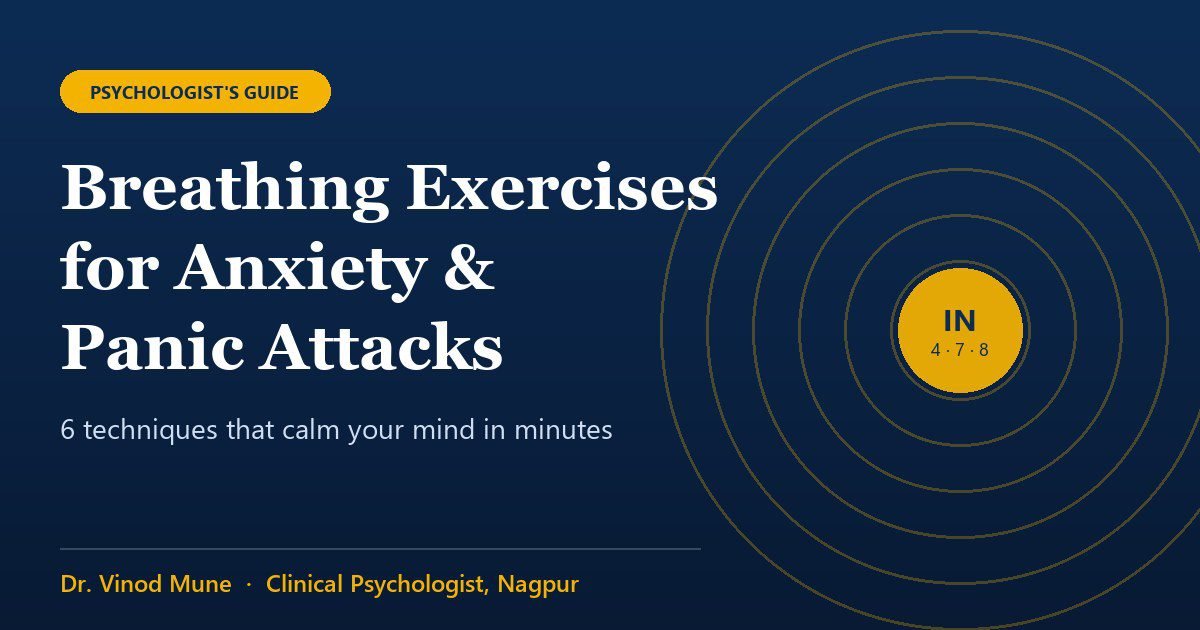
If you want more methods, especially for panic and worry, read our guide on breathing exercises for anxiety.
How to Build a Daily Breathing Habit
- First, practise at the same time each day, such as after waking or before bed.
- Next, start with just five minutes and add time slowly.
- Also, sit with a straight back and relaxed shoulders.
- Always make the exhale longer than the inhale.
- Stop and breathe normally if you feel dizzy.
- Finally, use short breathing breaks during the day, for example at traffic lights or before meals.
Breathing Exercises for Stress and Physical Health
Breathing is not only about the mind. It also supports the body. Slow, deep breathing can ease muscle tension, lower stress-linked blood pressure and improve sleep quality. For more on this link, see our guide to high BP treatment in Nagpur. Similarly, calm breathing can reduce gut upset linked to stress, as explained in our IBS treatment guide. However, breathing exercises are a support, not a replacement for medical care. Always follow your doctor’s advice for any health condition.
When to Get Professional Help
Self-help works well for everyday stress. However, if stress feels constant, panic attacks repeat or sleep keeps failing, guided help is wiser. A breathing coach teaches you the right pattern, checks your technique and combines breathing with relaxation and hypnotherapy. You can explore the breathing coach programme or read about hypnotherapy in Nagpur. If you ever feel unable to stay safe, call the Tele-MANAS helpline at 14416 or emergency number 112.
Frequently Asked Questions
How long should I practise each day?
Five to ten minutes, once or twice a day, is enough to start. Regular practice matters more than long sessions.
How soon will I feel the effect?
Many people feel calmer within a few minutes. Deeper benefits, such as better sleep, often build over two to four weeks.
Are breathing exercises safe for everyone?
Most are safe. However, avoid long breath holds if you have heart, lung or pregnancy concerns, and ask your doctor first.
Can breathing exercises replace therapy or medicine?
No. They support treatment, but severe anxiety or depression needs proper professional care.
Can I learn online?
Yes. Online coaching also works well and suits people outside the city.
Learn Breathing With Expert Guidance
You do not have to figure it out alone. A short guided session can teach you the right pattern in minutes. Call or WhatsApp +91 98904 78286, or send a message from the contact page. You can also view the full list of treatments at the clinic in Renuka Vihar, Beltarodi Road, Nagpur.
Disclaimer: this article is for general information. It is not a diagnosis or a substitute for professional medical advice.